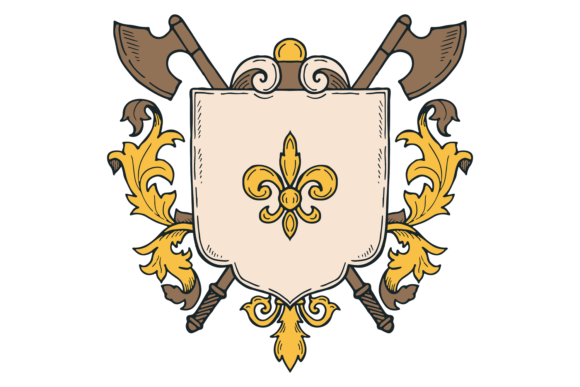
Mastering the Crossed Axes Blazon Template: A Guide to Professional Heraldic Design
There is a distinct weight and authority conveyed by a well-designed heraldic emblem, and few symbols communicate strength quite like the crossed axes. Whether you are developing a brand identity for a tactical gear company, creating a logo for a historical reenactment group, or designing a custom crest for a family reunion, the Crossed Axes Blazon Template serves as an essential foundation. These decorative assets provide the structural integrity needed to build a professional-looking shield without requiring years of study in vexillology or heraldry. However, simply downloading a file and slapping it onto a website often leads to disappointing results. To truly leverage these templates, one must understand the nuances of file formats, scalability, and design integration.
The primary appeal of using a pre-made blazon template lies in efficiency and accuracy. Heraldry follows specific rules regarding symmetry, proportion, and layering. A high-quality template handles the heavy lifting of drawing the shield outline and positioning the axes correctly, allowing you to focus on color theory and additional iconography. Yet, many creators stumble early in the process by overlooking the technical specifications of the files they acquire. This oversight can severely limit how the final design is used across different media, from business cards to large-format banners.
Navigating File Formats and Scalability Issues
One of the most frequent missteps occurs when users prioritize convenience over quality during the download phase. You will often find these templates offered in a variety of formats, including EPS, JPG, SVG, and transparent PNG. While a JPG might look crisp on your screen initially, relying on it for any serious design work is a strategic error. JPGs are raster images, meaning they are composed of pixels. If you need to resize the logo for a large sign or a high-resolution print, a JPG will become pixelated and blurry, destroying the professional aesthetic you aimed for.
To avoid this, always prioritize vector formats like EPS or SVG when available. Vector files use mathematical paths rather than pixels, ensuring that your crossed axes blazon remains razor-sharp at any size, from a favicon to a billboard. If you are working with a transparent PNG, ensure it is of sufficiently high resolution (usually 300 DPI or higher) for your intended print purposes. A common misconception is that "transparent background" automatically means "high quality." In reality, a low-resolution PNG with a transparent background is just a low-quality image with invisible corners. Always check the dimensions and DPI before committing to a specific file type for your project.
The Trap of Generic Application and Lack of Customization
Another pitfall involves the temptation to use the template exactly as it appears out of the box. While a decorative heraldic shield isolated on a white background looks impressive in a stock photo preview, using it without modification can make your brand look generic. Many entrepreneurs and marketers make the mistake of assuming that because a template is "decorative," it requires no further artistic input. This approach fails to establish a unique identity. If ten different companies use the same unmodified crossed axes template, none of them stand out.
The better approach is to treat the template as a skeleton rather than the final product. Use the provided shield shape and axe placement as a guide, but inject your own branding elements. This could involve altering the color palette to match your corporate identity, adding a motto scroll beneath the shield, or incorporating secondary symbols that represent your specific niche. For instance, if you are a landscaping business using the crossed axes motif, consider integrating leafy vines around the shield border to soften the aggressive nature of the axes and tie it to your industry. The goal is to balance the traditional authority of the blazon with the unique personality of your entity.
Understanding Context and Symbolism
Before finalizing your design, it is crucial to consider the semiotics of the crossed axes. Historically, this symbol has been associated with military units, firefighting departments, and executioners. While in a modern commercial context it generally signifies strength, precision, and craftsmanship, it can carry unintended connotations if not handled carefully. A common error is ignoring the cultural context of the target audience. For a global brand, ensure that the imagery does not inadvertently evoke negative historical associations in specific regions.
Furthermore, pay attention to the style of the axes themselves. Are they medieval battle axes, firefighter tools, or ceremonial parade axes? A mismatch between the style of the weapon and the nature of your business can create cognitive dissonance for the viewer. A tech startup might look incongruous with heavy, rusted medieval weaponry, whereas a rugged outdoor apparel brand would benefit from that exact aesthetic. Ensuring alignment between the visual style of the template and your brand voice is a subtle but powerful way to enhance communication.
Technical Integration and Background Handling
When integrating the Crossed Axes Blazon Template into your existing marketing materials, background handling becomes a critical technical hurdle. Many users download the version isolated on a white background and struggle to remove it cleanly in their design software. This often results in unsightly white halos around the edges of the shield, which look amateurish on colored websites or dark packaging.
To circumvent this, always seek out the version labeled as transparent PNG or utilize the vector files which allow you to delete the background layer entirely. If you only have the white-background version, learn to use clipping masks in software like Adobe Illustrator or Photoshop rather than relying on "magic wand" tools that often leave jagged edges. Additionally, consider how the shield interacts with different background textures. A complex decorative shield might get lost against a busy patterned background. In such cases, adding a subtle drop shadow or a solid color container behind the blazon can help it pop and maintain legibility.
- Check Licensing Terms: Always verify if the template is free for commercial use or requires attribution. Using a restricted asset can lead to legal complications down the line.
- Test Across Devices: Ensure the details of the crossed axes remain visible on mobile screens where space is limited.
- Maintain Consistency: Once you have customized the colors and proportions, document these settings to ensure consistent usage across all future marketing collateral.
Ultimately, the value of a decorative heraldic shield template lies in its ability to serve as a robust starting point for professional design. By avoiding the traps of low-resolution files, generic application, and poor contextual awareness, you can transform a standard asset into a distinctive brand mark. Take the time to evaluate the files, customize the elements to fit your narrative, and ensure technical compatibility across all platforms. With these precautions in place, the crossed axes blazon becomes more than just clip art; it becomes a enduring symbol of your organization's strength and heritage.